
Running a Sex Offender Check in Travis County
The Texas Department of Public Safety Crime Records Division operates the statewide public registry. A Travis County check can begin with a name, county, city, ZIP code, street address, state identifier, or map view. Each route answers a different safety question. A name search helps when the person is known, while a geographic search shows published locations near a place.
Local registration is handled by the law-enforcement authority for the municipality or county of residence. The registering agency shown in a Travis County profile is therefore a useful point of contact. For the correct county unit, use Travis County Sheriff's Office contacts before arriving in person. A statewide entry may be current even when no separate local public list exists.
Travis County Offender Search Paths
The official Texas Public Sex Offender Registry search combines person and place tools. Select Travis County for a broad county view, or use the city, ZIP, and address controls for a smaller area. Search labels can change, so read the live form before relying on an old set of steps.
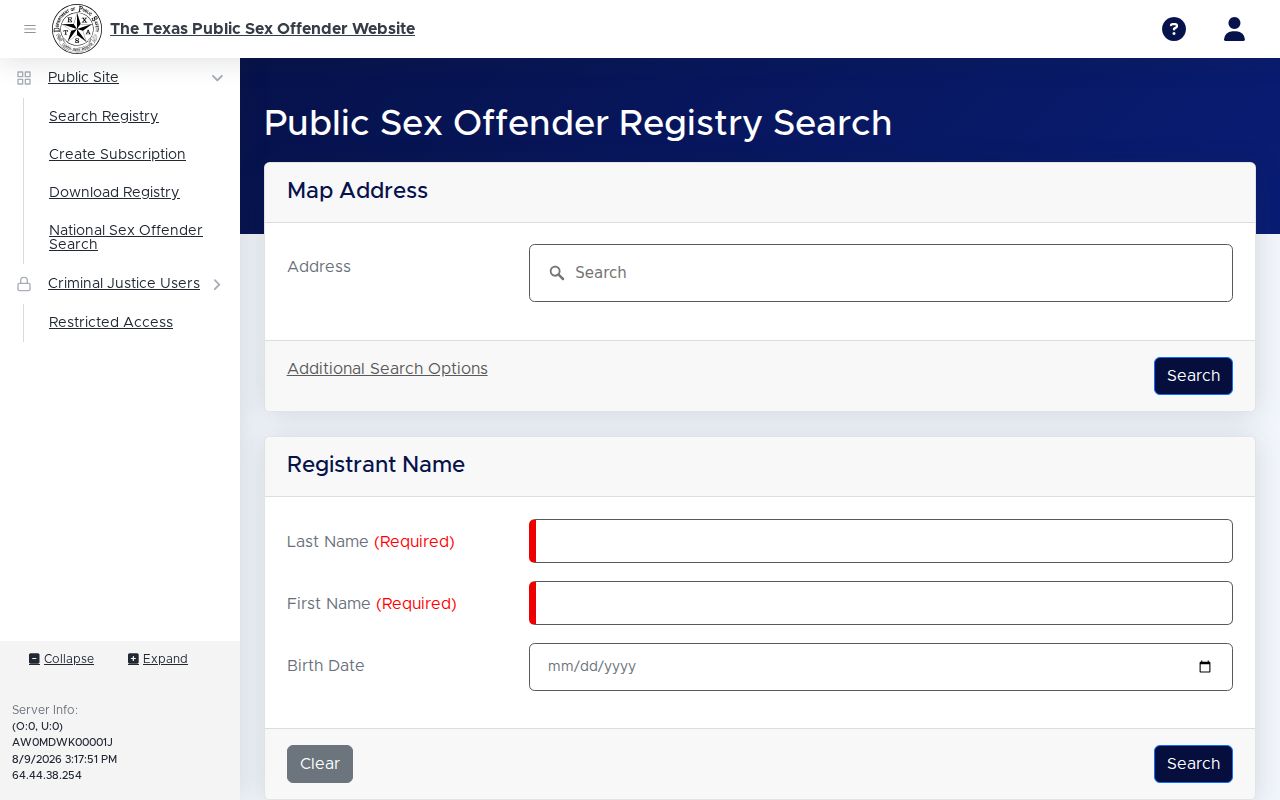
The Travis County search screen helps users choose the right path without centering the search on any one registrant.
Run more than one form of search when safety depends on location. A county filter can be broad, while an address or map view can reveal published locations near a specific point. A name search then helps confirm whether a known person is the same registrant shown in the geographic results.
Searching the Texas Public Sex Offender Registry
Begin with the least broad query that fits the Travis County facts. When searching by name, use first and last name if known. For a place check, normalize the street address and compare the map with the listed address type. A Travis County filter is useful, but municipal limits and county lines still matter.
- Open the DPS public registry and review its conditions of use.
- Choose name, identifier, county, city, ZIP, address, or map controls based on what is known.
- Open a possible result and compare aliases, photograph, physical description, address type, and registering agency.
- Read the offense, status, risk, and verification details before drawing a conclusion or contacting law enforcement.
| Field or control | Type | Use and notes |
|---|---|---|
| Last Name / Initial | Text | Starts a name search; first name can narrow it |
| City / County | Text or dropdown | Select Travis for county scope or a named city |
| ZIP Code / Street | Text | Supports place and address searches |
| SID | Text | Direct identifier route when the Texas SID is known |
| Status / Address Type | Dropdown | Narrows compliance state and displayed address category |
| Current / Primary | Checkbox | Limits the published location results |
| Submit / Clear / Map | Buttons or tabs | Runs, resets, or changes the result view |
Read Travis County Registry Matches Carefully
The DPS registry results and profile interface provides several points for identity review. Never rely on a shared name alone. Compare the photograph, age or birth information, physical description, aliases, marks, address, and agency data. A vehicle or work or school location may also appear when state law makes it public.
These profile fields reduce the risk of linking the record to the wrong Travis County resident.
If the profile appears inconsistent, do not confront anyone. Note the SID and registering agency, then use the official contact. The Travis County records directory can route a public-record question, while active safety concerns should go to the law-enforcement agency responsible for the place.
What a Registry Profile Shows
A public Travis County registry profile joins identifying facts with the legal basis and current registration data. Chapter 62 and court orders control what can be shown. Some juvenile, exempted, or otherwise protected registration information is not public.
| Name and aliases | Published identity names and the Texas DPS SID. |
|---|---|
| Photo and description | Photograph, sex, race, age or birth data, height, weight, hair, eyes, scars, marks, and tattoos. |
| Registered locations | Address and address type, with work or school locations when public under law. |
| Offense record | Offense description and statute, conviction or adjudication date, victim category, court, and state. |
| Risk and duty | Risk level, verification schedule, and the ten-year or lifetime indication. |
| Status and agency | Registration or compliance status, registering authority, and published vehicle details. |
Risk level and registration term are separate fields. A low, moderate, or high assessment does not by itself state how long the legal duty lasts.
Address type also needs care. A profile may distinguish a primary, secondary, temporary, work, or school location when the law permits publication. Read the label beside the place. Do not assume each listed site is the person's home, or that a map pin gives more precision than the profile itself.
Travis County Registry Risk and Duration
The official Texas Code of Criminal Procedure Chapter 62 sets the registration framework. Texas uses numeric risk assessment for disclosure and notification, but duration turns on the reportable offense and rules in Article 62.101. Treating risk as a federal tier or as an end date can produce a wrong result.
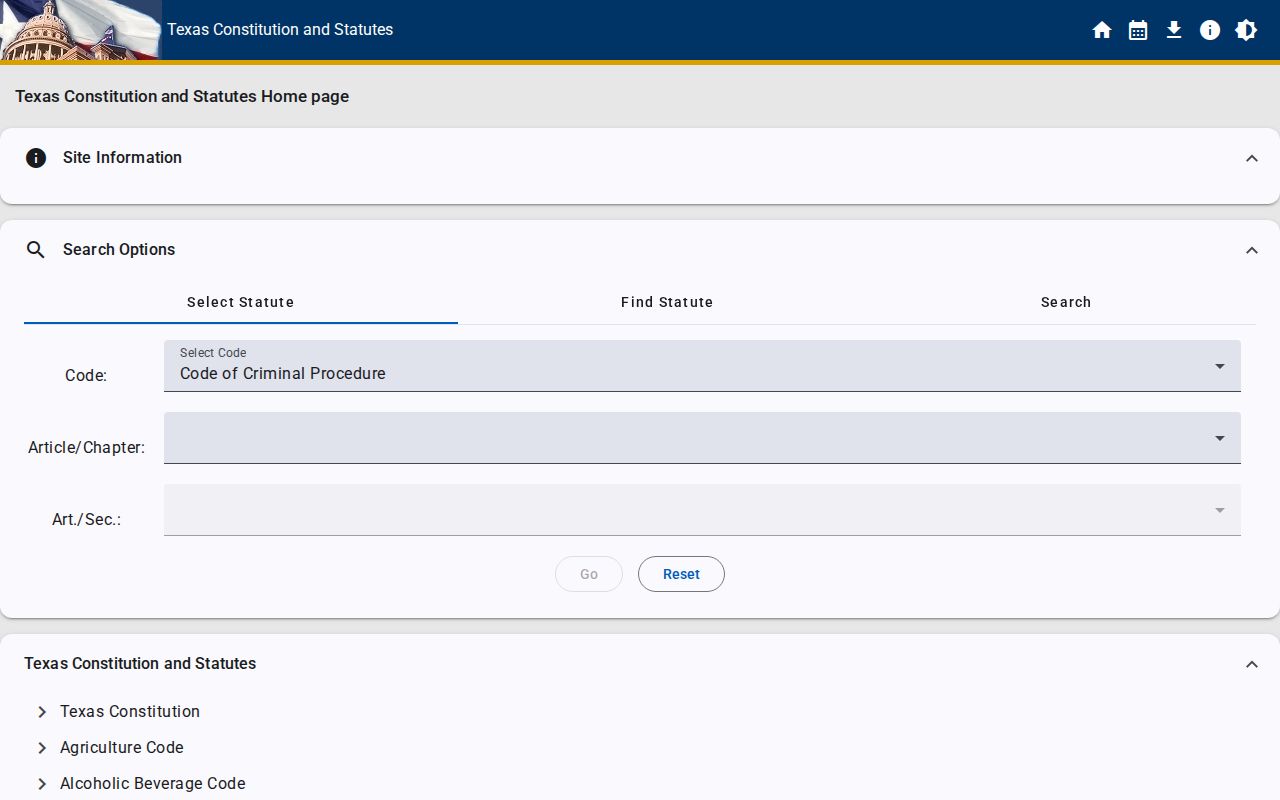
The statute is the source for checking whether a specific Travis County reportable offense carries a ten-year, lifetime, juvenile, or other distinct duty.
Many sexually violent and listed offenses require lifetime registration. Other reportable convictions generally continue through the tenth anniversary of release from incarceration or discharge from supervision, whichever comes later. Juvenile adjudications and early termination have their own rules.
Registration Requirements and Levels in Texas
Texas registration duties include an initial report to the applicable local law-enforcement authority, generally no later than seven days after release or a move, subject to the agency's first allowed date. Verification can be annual, every 90 days, or every 30 days for statutory groups. The profile should be read with the offense rule, not through a simple three-tier assumption.
| Texas concept | Duration or meaning | Verification |
|---|---|---|
| Low, moderate, or high risk | Assessment used for notice, not the term of registration | Does not alone set frequency |
| Ten-year duty | Generally ten years from release or discharge for qualifying non-lifetime offenses | Annual, 90-day, or 30-day cycle as the statute assigns |
| Lifetime duty | Sexually violent and other offenses listed by Article 62.101 | Annual, 90-day, or 30-day cycle as the statute assigns |
| Nonpublic or exempt status | A court or statute may restrict qualifying information | Public display does not define the full legal duty |
Contact the Travis County registering authority about the individual record. The public profile is a notice tool, not a substitute for a court order or a current statutory review.
Travis County National Registry Searches
Use the National Sex Offender Public Website when the concern crosses a state line or the last known place is uncertain. NSOPW searches participating jurisdictions, while the Texas DPS registry remains the primary state source for the Texas profile and its published detail.
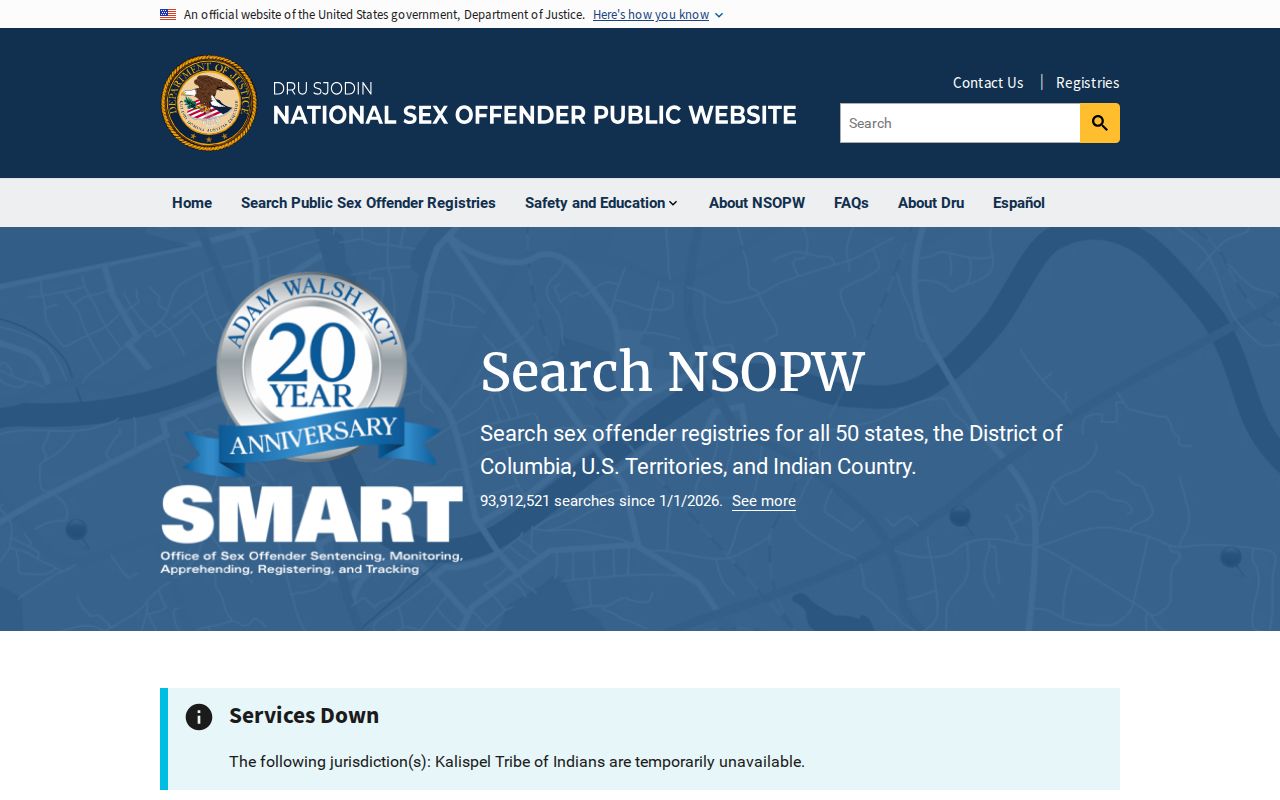
The national tool widens the map, but a Texas result should still be checked against the official DPS profile and its registering agency.
A missing national result is not proof that no Travis County duty exists. Jurisdiction participation, public-release rules, spelling, aliases, and update timing can affect what a broad search returns.
Lawful Use and Community Notification
Travis County registry data supports personal, family, and neighborhood safety. Texas authorizes release of specified information, but the publication does not authorize a reader to punish, follow, trespass against, or confront a listed person or household. Use the official report path when a profile appears stale or a duty may not be met.
Misuse is prohibited: Article 62.005 warns that registry information may not be used to injure, harass, or commit a crime; misuse can bring criminal or civil consequences.
The warning protects Travis County public safety as well as the integrity of the registry. Give a registering agency the SID, profile link, observed issue, place, and time without taking direct action.
Travis County Registry Release Boundaries
The DPS index of registry and crime-record laws points to the rules that divide public data from restricted criminal history. Public registry release does not open all records held by DPS or a local agency.
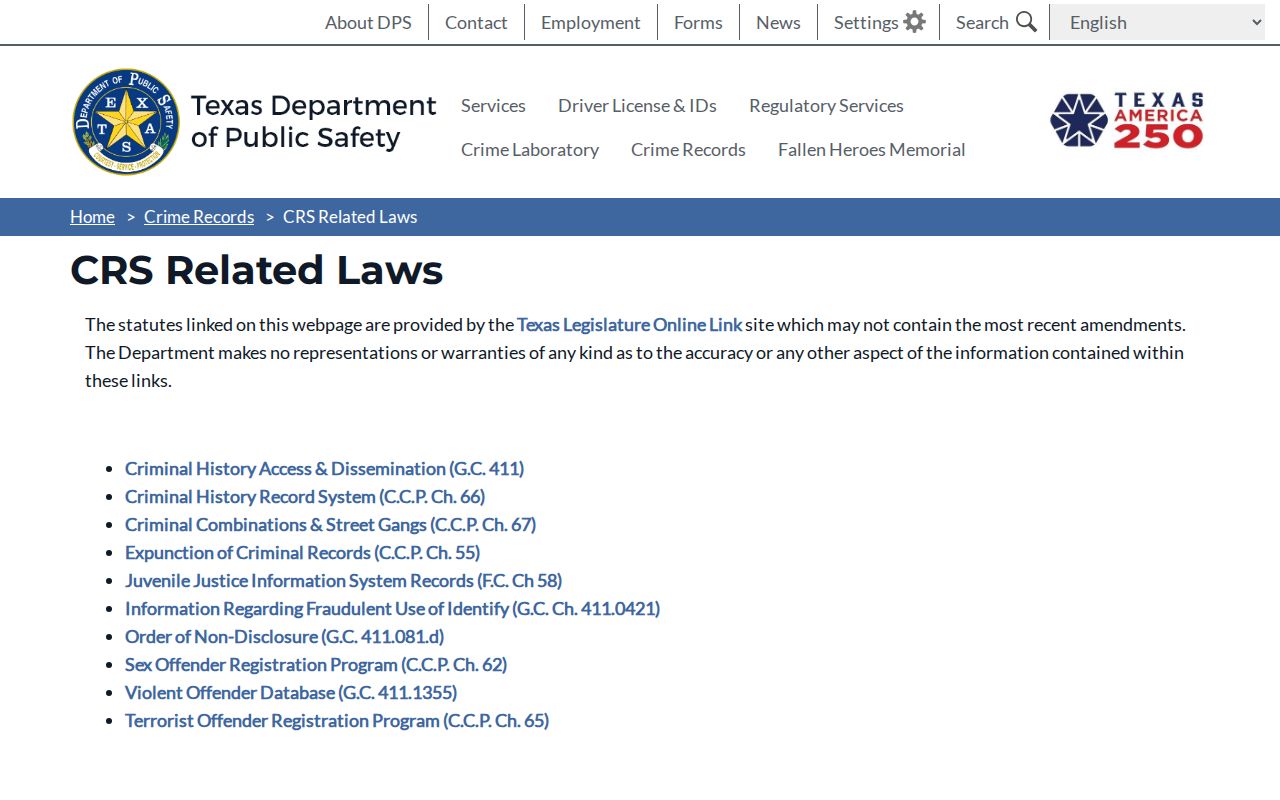
This official law index helps separate Chapter 62 registry publication from broader criminal-history dissemination rules.
The underlying Government Code Chapter 411 governs much of that dissemination and includes nondisclosure provisions. A public profile can therefore be available even though other agency records remain limited, while a nonpublic registration status may keep qualifying information off the public screen.
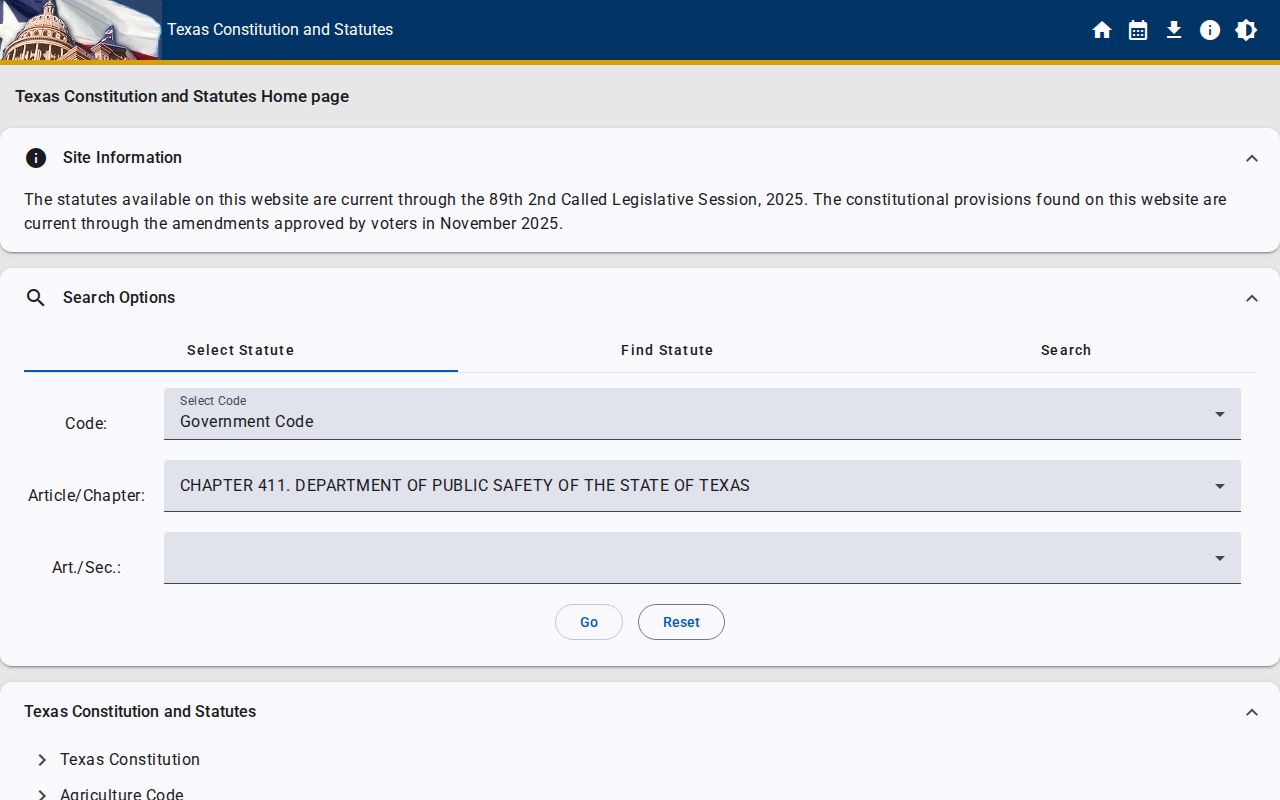
The two legal tracks explain why a registry check and a criminal-history search are not interchangeable products.